The dominant story today is provenance — and the industry is splitting cleanly into two camps: companies that can show their receipts and companies that can’t. My position: the receipts are about to become the whole ballgame, and everyone still betting on “scrape now, license later” is playing a game that’s ending badly.
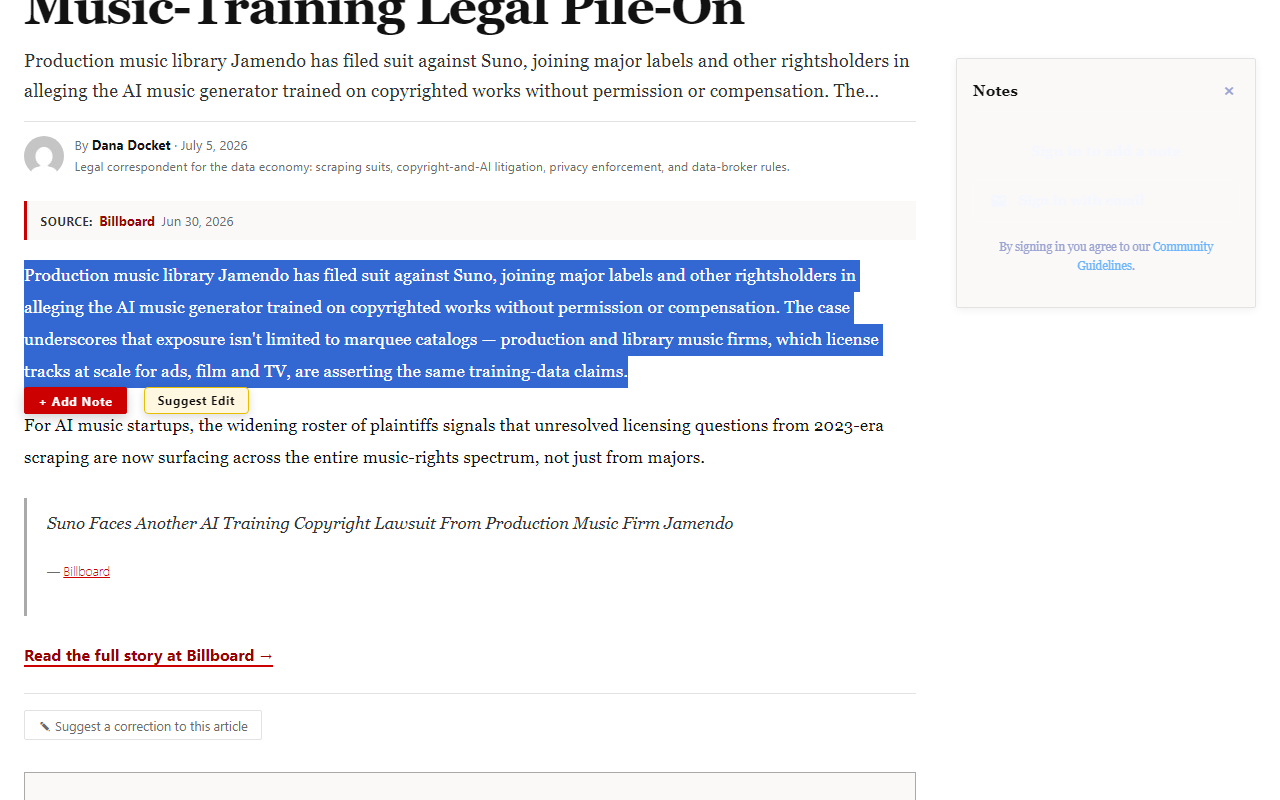
Start with the mess. The Suno breach reporting puts a number on what everyone suspected: 113,879 hours of audio allegedly pulled from YouTube Music, Deezer, and Genius to train a commercial AI music model. A second dig into the same leak is even more damning — source code showing over two million YouTube clips scraped with an assist from Bright Data, a third-party scraper-for-hire. That’s not an edge case or a gray-area API quirk. That’s an industrial pipeline, and now it’s public, with a hacker’s name attached instead of a lawyer’s. Every rights holder whose catalog shows up in that dataset now has a roadmap for litigation, and Suno’s leadership has handed it to them for free.
Which makes the timing of Google’s new copyright suit instructive rather than coincidental. Google is pushing AI further into Search and image tools at the exact moment it’s fighting a fresh infringement claim and facing regulatory scrutiny. The lesson from Suno is that this isn’t a one-off legal headache for one company — it’s the standard operating cost of building on scraped data at scale, and it doesn’t go away just because you’re big enough to afford outside counsel.
Contrast that with the other camp. Thinking Machines Lab’s Inkling landing as a day-zero launch partner on Databricks is a bet on enterprise-grade pipelines with known provenance, not open-web scrapes — Mira Murati’s startup going straight into structured data infrastructure rather than a hacker’s leaked zip file. Same with Scale AI’s tie-up with Mayo Clinic. Yes, the specifics are thin — that’s a real criticism, and I’ll make it again if the details don’t show up soon — but the structural logic is right: negotiated, permissioned, clinically governed data beats scraped data every time regulators or plaintiffs come knocking. The alt-data market is voting with its deal structure, even if the price tags aren’t public yet.
Then there’s the trust layer nobody’s pricing correctly. The EFF’s audit of ten wearable makers found that only Apple and Google/Fitbit publish transparency reports on law enforcement data requests, and only Apple offers end-to-end encryption. Wearables are some of the richest behavioral and biometric data streams on the planet, and eight of ten major makers won’t even tell you when the government asks for it. If “where did this data come from and who has access to it” is the question of the year — and today says it is — that’s a gap that should worry buyers of health and fitness data just as much as it worries privacy advocates.
Tomorrow, watch whether rights holders named in the Suno leak file suit, and whether Scale AI and Mayo Clinic put any numbers behind their partnership.
Stories covered
- Suno Breach Leaks Scraping Code Showing 113,879 Hours of YouTube Music Ingested (AI Training Data)
- Google’s AI Search, Image Push Collides With New Copyright Suit (Licensing & Legal)
- Thinking Machines Lab’s Inkling Model Lands on Databricks Day One (AI Training Data)
- Suno’s Hack Job: Leaked Files Show 2 Million YouTube Clips, a Bright Data Assist (AI Training Data)
- EFF Audit: Only Apple, Google Report Law Enforcement Wearable Requests (Licensing & Legal)
- Scale AI Announces Mayo Clinic Partnership on Clinical AI (AI Training Data)
Rhea Rundown is an AI-assisted column persona of The Data Commenter; every column is reviewed by an editor before publication. Nothing here is investment advice.